Home › Hydro Jetting
Hydro jetting against snaking — which one your line actually needs
A cable bores a hole through a blockage. Jetting removes it. The second costs more, lasts longer, and is not right for every pipe.
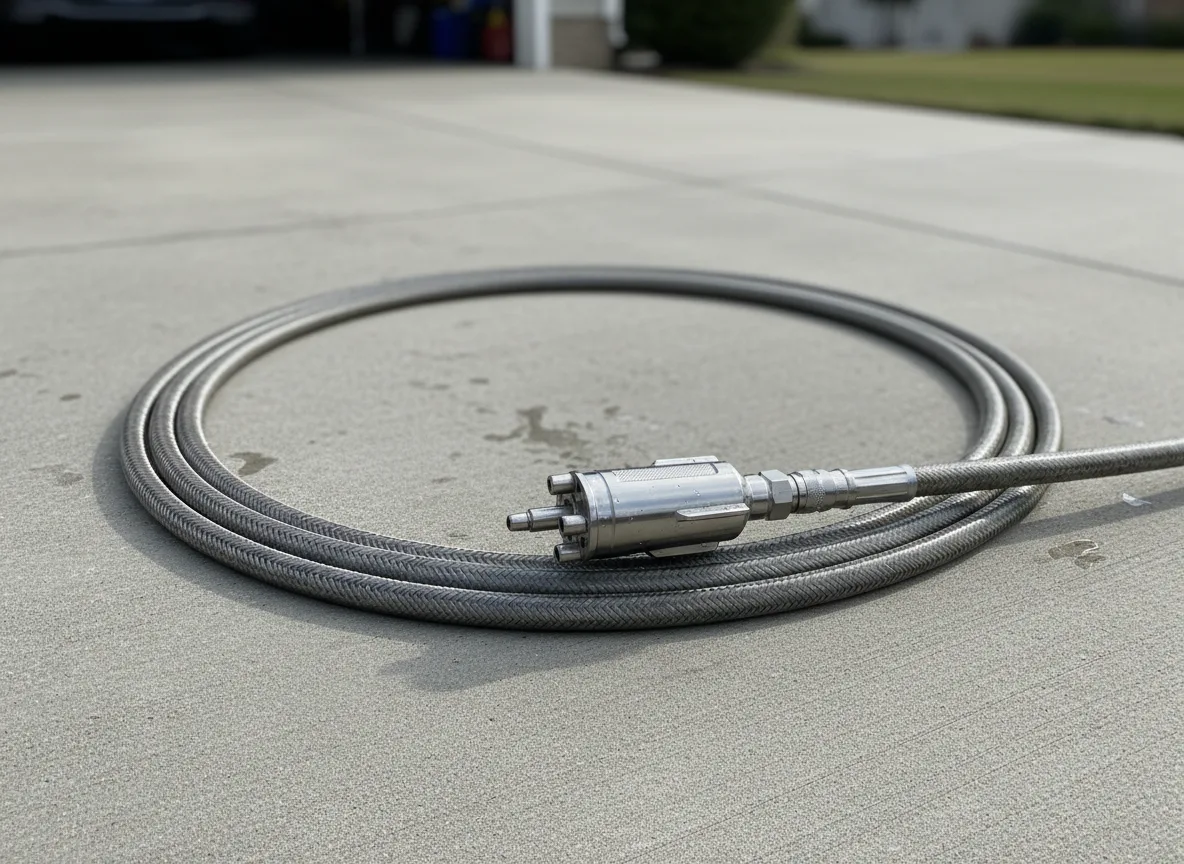
A cable bores a hole through a blockage. Jetting removes it. The second costs more, lasts longer, and is not right for every pipe.
A drain cable, or snake, is a flexible steel line with a cutting head that is driven through the blockage. It is fast, inexpensive, and it restores flow. What it often leaves behind is the material coating the pipe wall — it has made a passage through the obstruction rather than taking the obstruction out. Hydro jetting runs a hose down the line and uses high-pressure water through a rearward-facing nozzle to scour the full circumference of the pipe as it is drawn back. The line ends up close to its original bore.
Grease is the clearest case: it coats the pipe wall and a cable cuts straight through it, so a snaked grease line reclogs predictably. Scale buildup is the same. Fine root hairs are usually better removed by jetting than cut by a cable. And a line that has been snaked more than once in a year is telling you that snaking is not solving it.
Old or already-damaged pipe is the main one. Clay tile, aged cast iron with significant corrosion, or a line a camera has shown to be cracked can be made worse by high pressure. A reputable contractor inspects before jetting for exactly this reason. Jetting also does not fix a structural problem — a belly in the line will be clean after jetting and will still hold water, and a collapsed section needs excavation, not pressure.
Camera first, then choose the tool, then camera again afterwards to confirm the line is actually clear and to see what the blockage was hiding. That last step matters: roots and grease frequently obscure a crack or a joint separation that only becomes visible once the line is clean.
In sound pipe, no — it is routine maintenance on commercial lines. In degraded clay or badly corroded cast iron it can. That is what the camera inspection beforehand is for.
In a sound line cleared of grease or scale, typically years rather than months. If it reclogs quickly, the problem was structural and jetting was treating a symptom.
Meaningfully more, yes. Against paying to snake the same line three times, it is often the cheaper answer.
Send the details and we'll route it to a licensed local contractor.